
I Tried to Turn an Old House Into a Luxury Home With AI. It Was Not as Clean as the Demos Make It Look.
I started with one plain photo of a tired old house and a simple idea: what if this place could look expensive before I spent real money on it?
The short version: AI helped a lot. But only after I stopped treating the first result like magic and started using it like a rough design partner.
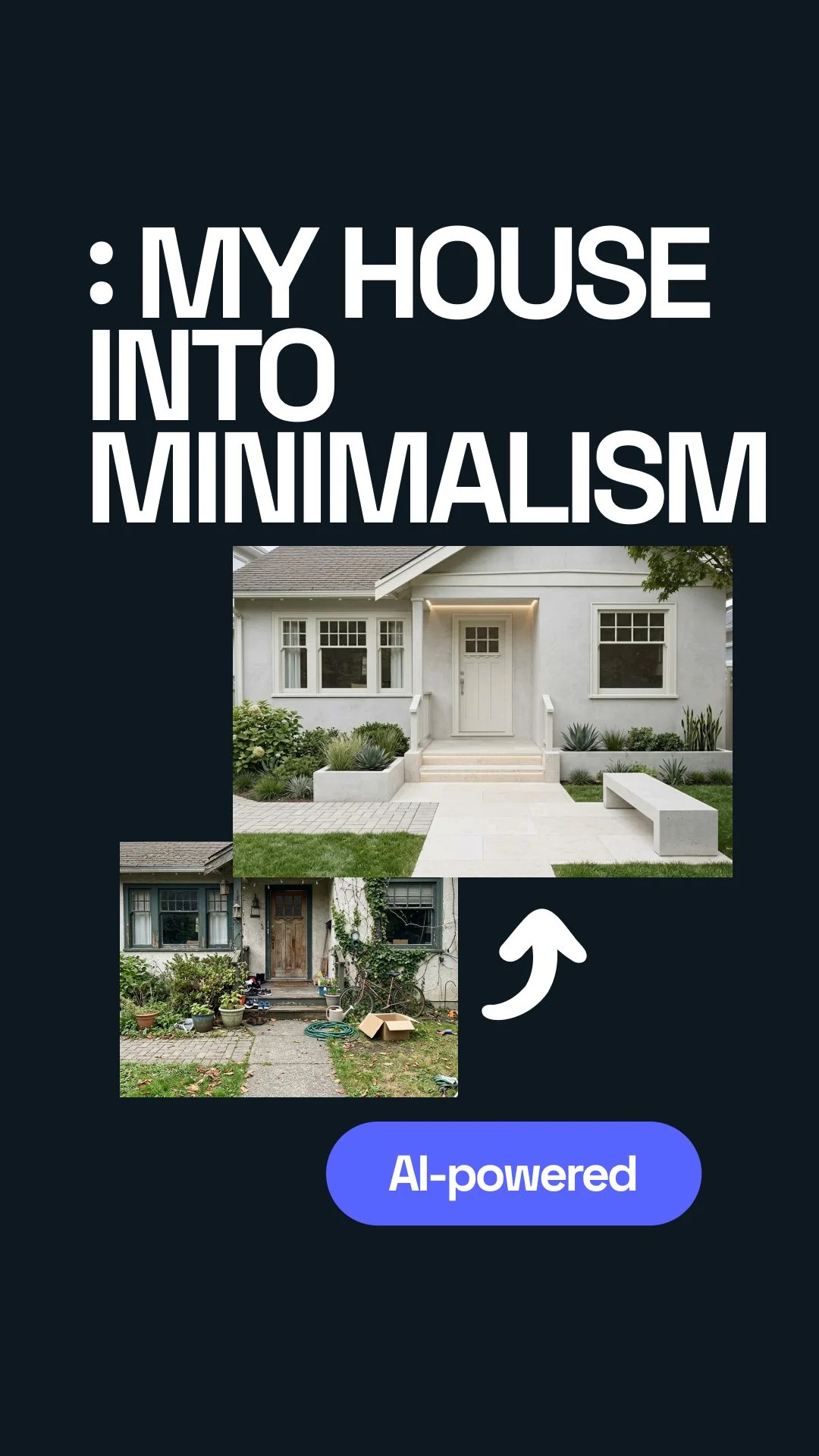



I started with a house I almost would have ignored.
The place looked old in that boring way, not in a charming way. Flat front. Tired walls. Random windows. A driveway that made the whole thing feel cheaper than it probably was.
I uploaded the photo into an AI renovation tool because I wanted to see one thing: could this house actually become something clean, modern, and a little luxurious?
I went into the style section, picked modernist, then added minimalist. I thought that would be enough.
The first result looked impressive, but also kind of wrong.
The AI gave me a sleek version of the house in about half a minute. Big clean surfaces. Dark frames. Better lighting. More expensive energy.
But then I noticed the weird stuff. One window had moved. The roofline looked too perfect. The entrance was beautiful, but it did not really match the original layout.
What looked good
- The house finally had a clear style.
- The facade looked more premium.
- The color palette made sense.
- The before-and-after was easy to understand.
What was off
- The AI “fixed” things I did not ask it to fix.
- Some details looked expensive but unrealistic.
- The render ignored budget completely.
- It made the renovation feel easier than it would be.
So my practical takeaway came pretty early: do not ask AI for the final answer. Ask it for options.
The workflow that worked was boring. That is why it worked.
I stopped chasing the prettiest image and started making smaller changes. Same photo. Same angle. Different prompts. One style change at a time.
Upload one clear exterior photo
        ↓
Choose one main style
        ↓
Add one mood:
minimalist, warm, luxury, Scandinavian, concrete, wood
        ↓
Generate 3–5 versions
        ↓
Ignore the prettiest one for a minute
        ↓
Ask: which version could actually be built?
That small shift helped. Instead of “make this house luxury,” I used tighter prompts.
“Redesign this old house exterior in a modern minimalist style. Keep the same structure, roof shape, window positions, and driveway. Improve materials, facade, lighting, landscaping, and entrance. Make it realistic and buildable.”
I know, it sounds less exciting. But the boring prompt gave me a more useful image.
At first, I thought the “before and after” was the whole point.
It is not. The before-and-after is just the hook.
The useful part is what happens after you look at it for more than ten seconds. You start asking better questions.
I made this mistake twice. I saw a beautiful version and started thinking like the project was already half solved. It was not.
The main insight: AI is best before you fall in love with a bad plan.
That is where it actually helped me. Not as a replacement for an architect. Not as a contractor. Not as a magic renovation machine.
It helped me see the gap between “this house is ugly” and “this house has potential.”
My simple rule now: if the AI result looks amazing but changes too much, I treat it as mood-board material. If it keeps the bones of the house and still improves it, I take it seriously.
Where Uniify fits into this.
A tool like Uniify makes the most sense when you are still deciding. Before you call three contractors. Before you pay for polished renders. Before you convince yourself the house is either hopeless or perfect.
You upload the house, test styles, compare directions, and save the versions that feel realistic. It turns a vague renovation idea into something you can actually discuss.
Bad use of AI
“This image looks expensive, so the renovation must be easy.”
Good use of AI
“This image shows a direction. Now I can check structure, price, permits, and materials.”
And honestly, that is enough. Not every tool has to finish the job. Some tools are valuable because they stop you from starting the wrong job.
The weird little lesson I did not expect.
The old house looked worse in real life than in my memory. Then the AI version looked better than the house could probably become. So the truth was somewhere in the middle.
That sounds obvious, but it matters. Renovation planning is full of that middle zone. You are guessing, comparing, getting excited, then calming down again.
I would still use AI for this. I just would not trust the first pretty answer. I would run more versions, keep the structure locked, and use the result as a conversation starter, not a final plan.
FAQ
Can AI really turn an old house into a luxury-looking home?
Visually, yes. It can show strong renovation ideas very quickly. But the image still needs a real-world check from builders, architects, or inspectors.
What style should I choose first?
Start with one clear direction. Modernist plus minimalist works well for old houses because it cleans up the shape without adding too much decoration.
Why did my AI result look strange?
Usually the photo was unclear, the prompt was too broad, or the tool changed structural details instead of only changing the design.
Should I show AI renders to a contractor?
Yes, but explain that they are concept images. Ask what is realistic, what is expensive, and what would need permits or structural work.
Image and rights note
Hero image: Unsplash editorial-style architecture image, used as visual inspiration. Check the original image page and Unsplash license terms before using it in paid campaigns, templates, or redistributed assets.