
I thought I needed a new life. First, I needed a room that did not feel like the old one.
After the divorce, I kept walking into the same living room and feeling like nothing had moved, even though everything had changed.
So I tried something small. I uploaded a photo of the room to an AI interior tool, asked for a calmer version, and learned the hard way that a home reset is not about buying everything new.




The room that kept pulling me back
I did not start with a mood board. I started by standing in the living room, looking at the same sofa, the same lamp, the same curtains, and thinking: this room still belongs to a version of my life that is gone.
That sounds dramatic, but it was very ordinary. I would make coffee, sit down, and feel heavy before the day even started. Nothing was broken. That was the problem. The room looked normal, but it felt wrong.
At first I told myself I needed to become stronger and just ignore it. Then I realized I was asking myself to heal in a space that kept reminding me of what happened.
My first mistake: I tried to “fix” the room like a designer
I opened Pinterest. Bad idea. Not because Pinterest is bad, but because I was not in a normal shopping mood. I was in a “please make my home feel less sad” mood.
So I saved twenty rooms that looked beautiful and completely unrealistic. Expensive sofa. Perfect shelves. Huge windows. No cables. No random chair in the corner. No real life.
Then I made the second mistake. I thought I had to replace everything. Sofa, rug, lamp, curtains, cabinet, maybe even the wall color. I turned a small emotional reset into a full renovation in my head.
That was the first correction. I did not need a perfect room. I needed a room that stopped fighting me.
How I used AI without making it complicated
I took one photo of the room. Not a professional photo. Just the room as it was. Messy enough to be honest, clean enough for the AI to understand the layout.
Then I used an AI interior design tool like Uniify and asked for something very plain: make this room feel calmer, brighter, and more positive, but do not turn it into a renovation project.
That last part mattered. When I forgot to say “no major renovation,” the AI gave me ideas that looked nice but were too big. Built-ins. New flooring. Fancy wall panels. I looked at it and thought, yes, beautiful, but absolutely not happening this month.
“Keep the main cabinet and room layout. Make the space feel calm, fresh, and more alive after a difficult life change. Suggest changes using paint, curtains, rug, lamp, sofa color, and small decor only. No structural renovation.”
The result came back fast. Around half a minute. And for the first time, I could see the same room without the same feeling attached to it.
The practical lesson came before the big insight
The first useful lesson was not emotional. It was practical: keep what is expensive or hard to move, and change what carries the mood.
Things I kept
- The cabinet
- The basic layout
- The main storage
- The room function
Things I changed or tested
- Curtains
- Rug
- Lamp
- Sofa color direction
- Wall paint idea
I expected the sofa to be the main thing. It was not. The curtains changed the room more than I expected. The rug did too. The lamp mattered because the old one made everything look tired at night.
And this is where I made another mistake. I almost bought the first thing that looked “new.” Not better. Just new. There is a difference.
Why blue and green worked better than safe beige
I thought I wanted neutral. Beige, white, grey, simple. I thought calm meant removing color.
That was only half true. Too much grey made the room feel flat. Too much beige made it feel like a waiting room. The AI kept giving me versions with blue and green undertones, especially in the curtains and rug. At first I ignored that because I thought it might look too bold.
Then I tried it visually. Not in real life yet. Just in the AI version. The room suddenly had air in it. It looked less stuck.
Blue helped with calm
Not bright blue. More like muted blue, slate blue, or blue with a little green inside it. It made the room feel quieter.
Green helped with life
Green made the room feel less sterile. Plants, green undertones, and soft textiles made the space feel more human.
This was not a magic therapy trick. It was just a better direction. And honestly, when you are rebuilding your day-to-day life, a better direction is already a lot.
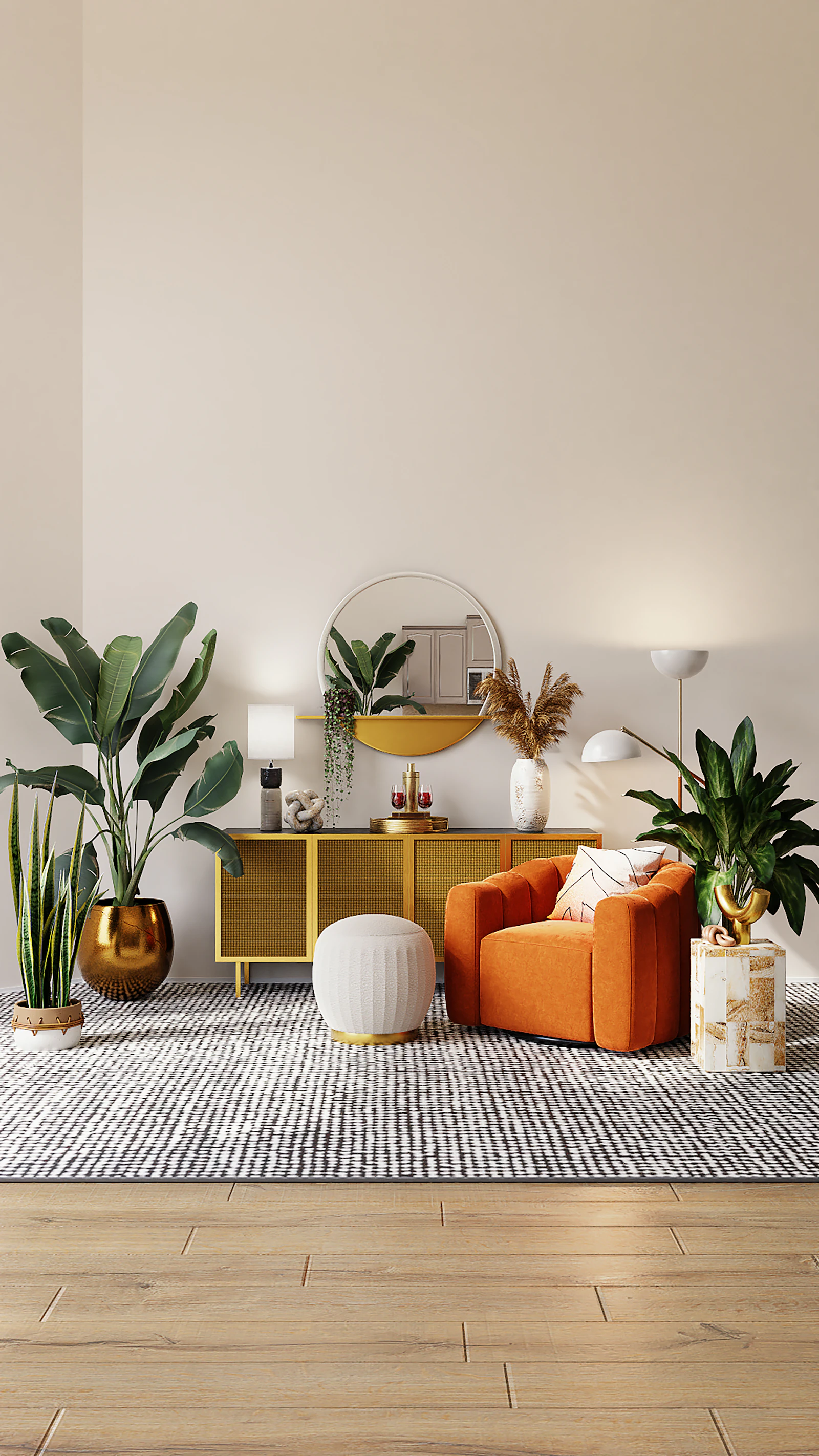
What changed in the room
The before version was not terrible. That is what made it confusing. It was just dull. Heavy. A little lifeless. The kind of room where nothing is technically wrong, but you do not want to stay there.
The after version kept the cabinet. That surprised me. I was sure the cabinet was part of the problem, but it was not. The problem was everything around it.
Before
- Flat color palette
- Old lamp made the room feel tired
- Rug did not connect anything
- Curtains made the space feel closed
After
- Fresh wall color direction
- Blue-green curtains
- Warmer lighting
- Different rug to pull the room together
There was one slightly ridiculous moment. I caught myself staring at an AI version of my own room like it was a place I had visited on holiday. Same walls. Same cabinet. Somehow different life.
That is when the main insight started to land, but not all at once.
What I would do again
I would not start with shopping. I would start with a photo. Upload the real room. Ask for three calmer versions. Then look for the pattern.
When I did that, I noticed the same ideas coming back: softer curtains, better rug, warmer light, less visual noise, more blue-green tones, and fewer objects that felt like leftovers from another chapter.
I also would not ask the AI for a “beautiful room.” That is too vague. I would ask for the feeling.
The practical takeaway is simple: choose one room, keep the expensive parts, change the mood-carriers, and test everything visually before spending money.
My second insight is messier, but probably more honest: after divorce, you do not always know what your new taste is. Sometimes you have to see a few wrong versions before you recognize the right one.
That is where AI helped most. It let me be wrong without buying the wrong sofa.
FAQ
Can a room redesign really help after divorce?
It will not solve everything. But it can remove daily reminders and help your home feel like it belongs to your next chapter.
Should I throw everything away and start over?
No. That can become expensive and emotional very fast. Keep the useful pieces. Change the things that shape the mood.
What should I change first?
Start with curtains, rug, lighting, and wall color. These usually change the feeling of a room faster than small decor.
What should I ask the AI?
Ask for a mood, not just a style. For example: “Make this room calmer, warmer, and more alive without major renovation.”
Why use Uniify for this?
Uniify helps you test room ideas visually before you commit. That is useful when you want change, but you do not want to make expensive emotional purchases.
Image notes
Images used in this article are from Unsplash and are included as visual editorial references under the Unsplash License. Final CMS publication should confirm image selection, compression, and alt text before upload.